

 Gov 2.0 University begins on September 29th & 30th at LMI in Tyson's Corner, Virginia. Modus Cooperandi has been working with Hinchcliffe & Company and LMI to create a cutting-edge curriculum that focuses on how to employ 2.0 technologies, patterns, and practices. Courses are already scheduled into 2010. The university includes personal briefings for high ranking officials, two day managers' seminars, and five day practitioner courses.
Personal Kanban and the World Bank
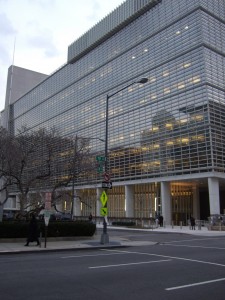 Modus Cooperandi is excited to announce our upcoming personal kanban project, where we will use our Personal Kanban techniques in a directed exercise with knowledge workers from around the world. From the 21st through the 25th of September, Jim Benson and Tonianne DeMaria Barry will be working with The World Agroforestry Centre and the World Bank to lead their Capacity Building Program on the Opportunity Costs of Reducing Emissions from Deforestation and Land Use Change (OpCost) Writeshop, at the World Bank Institute in Washington D.C. The intent of this directed exercise is to create a comprehensive technical document. As small working groups and as a unified team, participants will use personal kanban to maintain project coherence and track completion. The project is expected to achieve rapid release of a highly technical product by knowledge workers from around the world. The multi-lingual, multi-disciplinary group will benefit from personal kanban's visual controls and work flow.
We will be blogging and tweeting about the event as it unfolds.
Photo: Brixton
Jim Benson to Teach Enterprise 2.0 in Zurich - Nov 2, 2009
 On the 2nd of November, 2009, Jim Benson will be teaching Enterprise 2.0 as part of Somesso's Leveraging Corporate Social Media in the Finance Sector event in Zurich, Switzerland. The Enterprise 2.0 track is part of our on-going strategic partnership with Dion Hinchcliffe and Web 2.0 University. Using Dion's courseware, Jim will be teaming with a German counterpart to tailor the materials to the European financial community.
Photo: BeatKüng
Instant Karma
 Coming Soon, Instant Karma: 10 Principles of Social Media for Business
Scrumban by Corey Ladas
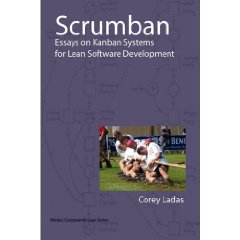
Corey Ladas' groundbreaking paper "ScrumBan" launched hundreds of software development teams on the path from iterations to flow.
Scrumban does not prescribe this transition, because each team has its own process needs. But if you are moving from Agile methods to Lean, Scrumban is the book that started it all.
Kanban also provides a powerful mechanism to identify process improvement opportunities. This book covers some of the metrics and day-to-day management techniques that make continuous improvement an achievable outcome in the real world.
ScrumBan the book provides a series of essays that give practitioners the background needed to create more robust practices combining the best of agile and lean.
Buy your own copy of Scrumban
Microenterprises and the Enterprise 2.0 Trajectory
PAY NO ATTENTION TO THE MAN BEHIND THE CURTAIN!
What is the curtain?
The enterprise is the curtain.
In concurrent posts, SocialText’s Michael Idinopulos discusses killing pilot projects and the true nature of Enterprise 2.0. He explains:
Enterprise social software isn't one application. It's a range of collaborative modes that includes blogs, wikis, micromessaging, personal dashboards, collaborative spreadsheeting, and social bookmarking.
When Michael discusses killing pilot projects (small rollouts as proofs of concept), he is spot-on in saying that the real value inherent to those types of projects is borne of network effects, not in the efficacy of the technology. So pilot projects = proving the tech and not realizing the business value. It would be like if I told you I wanted to know what University life was like, and you suggested I speak to a professor for a day to “try it out.”
Today, Dion Hinchcliffe compiled a list of Web OS trends. His first one is perhaps the most important:
Innovation is one of the easiest and least risky areas that can be tapped by most organizations.
Michael and Dion's quotations complement each other beautifully, and can be restated as:
Enterprise social software isn’t one application. It’s the realization that innovation has become the easiest and least risky way to solve problems within an organization.
Perhaps most important here is the word "enterprise." I submit that the term has fundamentally shifted from a consolidated model to a distributed one. The enterprise is no longer a central node with dependent groups hanging off of it. Rather, it has evolved into a network with greater nodal autonomy, faster communication, and improved decision making power.
This nodal structure was there all along. We see it in the human circulatory system, we see it in the layout of ant colonies, we see it in flora and fauna.
The hierarchic enterprise is the curtain. We have been fooled into believing that there is, or even should be, one central corporate OZ qualified to make all decisions. Over time, centralization has created costly information and decision making bottlenecks. Does this mean hierarchy is dead? Obviously not.
Enterprise 2.0 is not a panacea, it is a tool to allow corporate structures - congested by unnecessary bottlenecks - become leaner organizations. By redistributing information and decision making, companies limit waste, reduce costs, and are afforded the freedom to innovate. Microenterprises joined as nodes to a larger enterprise have the simultaneous ability to function both independently and as part of a cohesive whole.
What this means for Enterprise 2.0 is not that it becomes the next ERP, but that it becomes a host of spot-applications or, as Michael says, collaborative modes that allow us to realize Dion’s inexpensive and relatively painless innovations.
P.S. I really appreciate Michael’s “collaborative modes” – it re-orients the conversation from one of techno-miracles to one of business process. Not what are we going to use, but what are we going do?
Blogged at Ebeneezer’s Coffee House in Washington DC.
Photo by Tonianne
Enterprise 2.0 is Not an Application
Integration is Enterprise 2.0.
This week my friend and colleague Dion Hinchcliffe posted an article on ZD Net describing 14 Reasons Why Enterprise 2.0 Projects Fail. In it he paints a picture of valiant workers surreptitiously cyber-skulking on dank distributed web sites, efficiently working and making money for their companies – all the while keeping an eye out for dagger-wielding IT staff looking to keep their security models and networks digitally pure.
He’s right, this absolutely happens. I’ve seen it in small companies, government agencies, and Fortune 10 behemoths. It is beautiful.
These localized projects are the seeds of true Enterprise 2.0.
Dion’s list of 14 reasons is long, so I’ll let him tell that story (read his post). Here however, we can discuss how those "failures" might fail outright or undervalue success, but our collective definition of success may need some rethinking.
Several of Dion’s 14 (2, 3, 8, 10, 13 and 14) revolve around building Enterprise 2.0 environments that people will use and in the provision of a corporate culture in which they can be used. Another group (4, 5, 6, 7 and 11) call for a coordinated social management plan. Political buy-in is covered in 9 and 12.
Dion’s #1 reason is that solutions can end up being departmental successes, yet not work their way into the rest of the organization.
I believe in the loosely coupled aesthetic.
Those departmental successes that don’t spread to the organization (Dion’s #1 type of failure) may be the real definition of Enterprise 2.0 success.
Corporate Social Management Plans should lay out flexible and forgiving models where workers can select any application they want, and IT should provide simple APIs to connect to any relevant central data hubs. Corporate cultures should back up these plans by rewarding the active seeking out and usage of tools to solve specific problems. Workers should be empowered to use the best tool for the job at the time.
Dion is absolutely correct, Enterprise 2.0 should be about flexibility and solving problems and not about the pervasive use of specific apps across an organization. Why? Because there is a tipping point between what is a popular application and what becomes an institutionalized application. Once we hit that tipping point, it’s no longer Enterprise 2.0.
To sum up
Enterprise 2.0 should be a structure that allows great flexibility in the choice and use of applications throughout an organization, supporting the applications with APIs to allow data to be taken from and deposited into central data stores.
And
Enterprise 2.0 currently “fails” because we are attempting 1.0 deployments of 2.0 applications.
Photo by Certified Su
How Am I Doing? Measuring Success in Personal Kanban
One cannot choose wisely for a life unless he dares to listen to himself, his own self, at each moment of his life.
- Maslow, The Farther Reaches of Human Nature
Okay, so we’ve gone through several ways kanban can look, be used, and operate. We’ve discussed ways to prioritize work. But we have yet to address how to measure (gulp) performance. But what exactly is “performance,” and why do we care?
Toyota’s Taiichi Ohno is credited with the initial deployment of kanban, and the creation of Lean and Just-in-Time management concepts. His goal was to make Toyota the world's leader in automobile production, so he needed some metrics. Ohno understood that simple numbers did not drive performance, but that Toyota's staff and its suppliers needed the will to work better.
Along the way, physicist Eli Goldratt came up with the Theory of Constraints (TOC). (You can hear Goldratt say he needs 4 days to define TOC in this video.) His glowing gem of wisdom is that we conceptually overcomplicate problem solving by identifying way too many constraints to arrive at a solution. When we want to get to a goal, we tend to lose the goal from all the little issues that surround it. But, usually there are one or two big constraints that, if solved, will both provide huge results and often solve a lot of the little constraints or make them irrelevant.
The beauty of both these messages is that small changes make big differences – if they are the right small changes. What do you need to identify the right small changes to increase the will to work better? Awareness.
Personal kanban helps give us that awareness, enabling us to begin to listen to ourselves. A few posts back I discussed retrospectives, how they were vital at the beginning and became less so as we incorporated self-improvement into our normal actions. As you focus less on that massive pile of little nuisance constraints that surround you, and move instead to the high-payoff constraints, you move to what Ohno calls a “kaizen” state. You begin to continuously look for ways to improve your quality of life.
Please notice, I’m not telling you how to improve your life or even suggesting what improvement looks like. That’s totally up to you. If you want to work towards helping to save the rainforests, that’s fine. If your goal is smoking 10 cartons of cigarettes a day while watching cage fighting...well, I guess someone has to do it. Our goals are our own. They’re not for retirement, they are for living. If you want wifi and code, you design your life to allow wifi and code.
If we can clear the big things that Goldratt calls constraints or Ohno calls waste from our plate, what’s left is a clear and open space to do some real living.
Musicians must make music, artists must paint, poets must write if they are to be ultimately at peace with themselves. What human beings can be, they must be. They must be true to their own nature. This need we may call self-actualization.
- Maslow, Maslow on Management
In upcoming posts, I will cover a few ways - some absurdly simple, others a little more complicated - for how your personal kanban can tell you some pretty amazing things about how you work. Hidden in those post-its is some pretty awesome insight.
Image: The Programmer’s Hierarchy of Needs
cc. David Flanders
Personal Kanban on Facebook and.
We’ve started a Facebook group for Personal Kanban, a dedicated web site is on the way, and a book is in development. I’m still tweeting about personal kanban through my personal twitter. If you want to read the existing personal kanban series, just click the link!
We really weren’t expecting personal kanban to take off like this. This inadvertently added to our workload (making our personal kanban even more important!)
As always, if anyone is working with personal kanban, we’d love to see you post your experiences and pictures on twitter, on your blogs, in the facebook group, or contact us and we’ll have you guest-blog on the upcoming personal kanban site! Everyone’s stories are as individual as their work is. The more stories we can gather from different individuals and groups, the more we can punctuate how this is an adaptive tool and *not* a one-size-fits-all personal management pipe dream.
Sente and Gote in Personal Kanban
Sometimes your relationship to work is initiative based, other times it is reactive. This is simply the nature of work. It is normal, and nothing - not personal kanban, not GTD - is going to change that.
In the game “Go” (“Weiqi” in Chinese) there are balanced strategic concepts for the natural ebbs and flows of taking the initiative or reacting to a change in a situation. “Sente” is the term for the initiative, “Gote” is the term for being reactive.
In English, we’d be tempted to equate these to Offense and Defense. However, there’s a subtle difference here. The word “defense” has a few connotations we’d like to avoid when working. One is that you are on the defensive when you’ve lost control of something. The other is that the goal of your defensive strategy is to quickly regain an offensive strategy.
This comes from the animal brain inside us all. Reaction is the gazelle taking flight when the cheetah springs forth. Reaction, for human beings, naturally caries a fight or flight response.
In Go, Sente and Gote positions are perfectly acceptable at all times. There are Go Masters who can win a game and play almost entirely from a Gote position. The Sensei knows that reaction is itself an action.
Why is this important?
Life comes at you fast. The nature of personal work is that some days are quiet, comfortable, and predictable. They are yard work or cleaning the house. Systematic and reassuring. Other days your water heater explodes and covers your basement in water, steam and destruction.
Some days you are at work, methodically finishing up your report and other days you are surprised to get a report back with particularly nasty comments and an unrealistic deadline to fix it.
On days like this we realize that life doesn’t always respect our personal goals. Mopping up water and pulling down saturated wall board isn’t helping us achieve our goal of learning Spanish. This makes us feel like we are on the English term defensive, and that upsets us. We wanted to learn Spanish by Tuesday and now we have to wait.
Well, this is why most businesses fail. It’s why bosses are cranky. It’s why people don’t feel they get what they want from consultants. It’s why that damn plumber is STILL HERE installing the dishwasher.
Life is, by its very nature, chaotic. We’re lucky that it is predictably so, but it still does not adhere to our plans. Whether you are doing Sente or Gote work, the work needs to be done. The best way to assure rapid and effective completion is to look past the emotions of “defensive” and accept Gote into the attainment of your goals.
What kanban seeks to do is visualize how your work is actually done. It actually accounts for exploding water heaters and other unexpected events because, over time, your throughput will reflect these.
So, say you have 20 projects at home and they have an average cycle time of 4 weeks from conception to completion. The mean time to completion though, might only be 2 weeks. There were a few outliers in there that took 6 or 8 due to unforseen events.
What you know from this is that you have a maximum of 8 weeks to complete a household project, it’ll usually be done around 2 and that 6 is a very safe number to promise completion by, with 8 being virtually guaranteed. As you notice this, you can start to examine why those 8s are happening.
I’d be willing to bet those 8s are projects that developed a defensive posture and were delayed due to emotional reasons. In short, they were shelved because they became too hard to finish. Well, those unfinished projects mount up and procrastination has a price. You now have a 2 to 8 week variance in the time it takes you to finish something around the house.
So we can examine those projects. Are the 8 week ones just more complex? Do they involving cleaning? Yard work? Being outside when the chatty neighbor might want to chew your ear off? Are they perhaps even unimportant?
When you find the commonalities in the outliers, you can then develop Gote strategies. As I said, Go Masters are unphased by adopting a Gote posture because there are deep and tested strategies for achieving victory from Gote maneuvers. Part of this is tactical series of moves that undo an offensive maneuver by your opponent, but the other part is mental. Reaction to events whether on the Go board or in life in general is natural. Acceptance of this natural relationship calms the fight / flight response in our animal brains and allows us to quickly and effectively deal with the unexpected work. This reduces the time to completion, shrinks our cycle time, and eliminates outliers.
Be calm, deal with the issues, reduce variance.
Announcing PersonalKanban.com
When I began to write a succession of posts on personal kanban back in July, I thought a few people might benefit from the idea. I never expected that the series would attract tens of thousands of viewers to my blog, Evolving Web.
Less than two months later, there is a growing and enthusiastic personal kanban community which has been posting photos, discussing innovations, and advancing the meme. In a few short weeks, the community grew large enough to support a dedicated web site.
So I am pleased to formally announce the launch of personalkanban.com, a blog and resource for personal kanban. Already, about a dozen guest posters and regular contributors have stepped forward to take the meme and run with it.
Those of you who have been reading Evolving Web for a while know I’m all about community, process, and collaboration. Seeing this community form, that it’s based on a lightweight personal process, and that collaboration is already taking place is therefore an awesome birthday present for me this year.
Please give the personalkanban.com a visit and subscribe to the feed. If you have personal kanaban stories to tell, please e-mail me at jim !at! soundbag !dot! com. The community would greatly benefit from your experiences and writing.
Retrospectives and Personal Kanban
In both Agile and Lean management there are points called "retrospectives," regular and ritualized moments where a team stops to reflect. Checking processes for only a few minutes lets you re-orient the course of your work. These retrospectives allow a team the opportunity not only to celebrate or bemoan accomplishments or setbacks, but likewise to serve as a constructive way to create and direct their course. A retrospective shows us that things either went well or they didn’t, understanding that either way, there is always room for plotting the effectiveness of future work.
Over the past few months, I've spoken with many people who've begun to use personal kanban. During the course of this thread, many of them have shared how they've started to deploy Kanban as a collaborative tool, using it to plan, prioritize, and do work both at home and in their place of business. Now we have to go that last step - we have to think about what we’ve done.
Whether it’s on our own, with our families, or with a team, a retrospective is vital in being able to identify, elucidate, and enact positive change. Retrospectives can take place at whatever intervals you are comfortable with, and for whatever period of time. Again, I’m not writing a how-to manual here, these tools should help you or your group manage tasks in a way that works best for you.
We can - and will - discuss a range of options for what a retrospective might look like. But just like a kanban can reside on a white board, a piece of paper, a computer screen, or even a kitchen appliance, a retrospective is what works at the time. If you are just finishing a project in the garage or on day 4 of hurricane disaster relief, checking your processes for only a few minutes will let you improve what you're doing
You don’t have to fly to Pluto to gain from small course corrections. You want to always be fine-tuning your workflow and your work management. In upcoming posts, I’ll talk about a variety of retrospective styles – some that are thought exercises and others with statistical rigor. Whatever you prefer, there should be one for you and your team.
Note: When Kanban is working really well, and you have an intimate understanding of your work, then you will achieve what Lean calls a "kaizen state," a culture of continuous improvement. At that point, you are constantly doing retrospectives simply because you are so aware of your actions, and a such, a separate retrospective may not be necessary.
See the whole Personal Kanban series.
NewHorizons2015 is NASA’s Pluto Mission – which requires both course corrections and a whole lot of delayed gratification.
Viral Joy Watching the Spread of Personal Kanban
It has been fascinating to watch the personal kanban meme spread through use and not through pontification. When people see a personal kanban in action, it just makes sense to them.
Parents start with their own kanban and soon their kids have them and then the family shares them. Peter has one, then his girlfriend wants one as well.
There are stories coming in from people who have used personal kanban or something rather like it over the last several years. Educators and therapists have been giving me excellent feedback insofar as why it works for kids. Why it works for adults. And why it has such an instant appeal.
Hearing from practitioners in all sorts of fields is showing me that a visual flow-based self management system is simply how we are wired. That everyone can benefit from it has been shown time and again.
The fact that kanban can move seemlessly from the shop floor to children to development teams to all everyone surely must be telling us something. People aren’t just starting to use a kanban because it’s an alternative to the to-do list. They are using it because it is expressive, fun and makes life easier.
The Cumulative Flow Diagram: High Performance Monitoring
In the previous post, we discussed why you would want to measure your performance in Personal Kanban. Today I’ll begin with the most powerful - but perhaps most intimidating - technique. In upcoming posts we’ll look as some less intense methods, so don’t let this post scare you.
In kanban for software design, a "cumulative flow diagram" is used to track performance. A big part of the cumulative flow diagram is its ability to visualize how close you are to completion of a large project, and where bottlenecks or waste appears in the process. It’s a very powerful and descriptive tool.
Above is the cumulative flow diagram for the Modus Cooperandi Personal Kanban. The diagram illustrates how many tasks we have in a given part of our workflow. This is our workflow, so you don’t need to emulate it. The components are as follows:
Backlog: Items that have yet to make it into the workflow.
Priority 3: Items that are coming up in importance.
Priority 2: Items that are important.
Priority 1: Items that need to be done soon.
Working: Items in the process of being done.
The Pen: Items that are waiting for external input.
Complete: Items we’ve done today.
Archive: Items we’ve completed in the past.
On this particular day, we completed 96 things in the past, accomplished 2 that day, sequestered 3 in the pen, and so forth. Of course, as time goes on, your archive is going to become bigger and bigger. In a directed project with a finite number of tasks, this is a very important part of the diagram. For personal kanban however, where tasks will build up forever, it shows us how much we’ve done or are capable of doing.
Simply from a flow perspective though, we might want to eliminate that part of the diagram.
So here, with no archive, we can discern some interesting patterns.
First, we see where we complete some serious work. We also notice where we gain a lot more work. So on days where there is a tremendous dip in the number of tasks, in the above chart (but no dip in the first), we know that we moved a tremendous amount to the archive.
We can also see where we build up backlog again. So, essentially what we have here are two graphs that show us (1) we are completing work and the number of tasks completed is continuing a fairly uniform rise, and (2) we see the actual variations in our work and when we take work on.
Since the chart is a time slice taken daily at midnight, the parts of the kanban with a WIP limit should be uniform, and represented by fairly flat bands, with the only variation coming from “The Pen,” “working,” and “done.” If we have work in the backlog, we should be maintaining a fairly even amount of work in the queue. The diagram illustrates that we've been working to achieve this, and as we’ve worked more closely, the uniformity is starting to manifest itself.
What we want to avoid is having the backlog band grow at an alarming rate. We want work there to feed the queue, but if it gets too overwhelming, we then know we have to start saying no to tasks.
The time it takes to move a task from backlog to completion is called “lead time.” The time it takes to complete a task when you start working on it is called “cycle time.” “Work time" is how long tasks were on your board, and active. “Wait time” is how long a task sits idle in a queue, while waiting to be moved. In a personal kanban, you might move one or even dozens of tasks across your board in a single day, so for you these are the numbers to watch for variation.
If at some point you notice your lead time jumps to 20 days, it’s obvious that you have too much backlog. If your cycle time jumps, something is stopping you from starting work. If your work time jumps, something is stopping you from completing work. If your wait time jumps, something might be stopping you from working at all.
So...how do you measure this? At the end of each day, you can track the information in the cumulative flow diagram by counting the cards in each part of the work flow, and entering them into a spreadsheet. For the “times” you can write start and end dates on the cards, and calculate from there.
Or you can use Agile Zen - which is where these images came from - and leave the tracking up to Nate.
Kanban is Workipedia
 A wiki is a website anyone can edit.
A kanban is a workflow anyone can edit.
A wiki entry is always able to be improved upon.
A kanban card is always able to be refined.
In wikis, there is a constant reification of ideas.
In kanban, there is a constant reification of work.
In wikis, incorrect information is identified by the group and excised.
In kanban, waste is identified by the group and excised.
A wiki stores and displays information to make group effort available to all.
A kanban stores and displays information to make group effort available to all.
A wiki stores and displays information to make personal contribution explicit.
A kanban stores and displays information to make personal contribution explicit.
 A wiki draws on the natural human drive to complete a task.
A kanban draws on the natural human drive to complete a task.
A wiki is self healing through social editing.
A kanban is self healing through social management.
A wiki is a fundamentally simple concept with massive social repercussions.
A kanban is a fundamentally simple concept with massive social repercussions.
Kanban is Workipedia.
Why Retrospectives?

Small adjustments can make all the difference.
In both Agile and Lean management there are points called “retrospectives,” regular and ritualized moments where a team stops to reflect. Checking processes for only a few minutes lets you re-orient the course of your work. These retrospectives allow a team the opportunity not only to celebrate or bemoan accomplishments or setbacks, but likewise to serve as a constructive way to create and direct their course. A retrospective shows us that things either went well or they didn’t, understanding that either way, there is always room for plotting the effectiveness of future work.
Over the past few months, I’ve spoken with many people who’ve begun to use personal kanban. During the course of this thread, many of them have shared how they’ve started to deploy Kanban as a collaborative tool, using it to plan, prioritize, and do work both at home and in their place of business. Now we have to go that last step – we have to think about what we’ve done.
Whether it’s on our own, with our families, or with a team, a retrospective is vital in being able to identify, elucidate, and enact positive change. Retrospectives can take place at whatever intervals you are comfortable with, and for whatever period of time. Again, I’m not writing a how-to manual here, these tools should help you or your group manage tasks in a way that works best for you.
We can – and will – discuss a range of options for what a retrospective might look like. But just like a kanban can reside on a white board, a piece of paper, a computer screen, or even a kitchen appliance, a retrospective is what works at the time. If you are just finishing a project in the garage or on day 4 of hurricane disaster relief, checking your processes for only a few minutes will let you improve what you’re doing
You don’t have to fly to Pluto to gain from small course corrections. You want to always be fine-tuning your workflow and your work management. In upcoming posts, I’ll talk about a variety of retrospective styles – some that are thought exercises and others with statistical rigor. Whatever you prefer, there should be one for you and your team.
Note: When Kanban is working really well, and you have an intimate understanding of your work, then you will achieve what Lean calls a “kaizen state,” a culture of continuous improvement. At that point, you are constantly doing retrospectives simply because you are so aware of your actions, and a such, a separate retrospective may not be necessary.
NewHorizons2015 is NASA’s Pluto Mission – which requires both course corrections and a whole lot of delayed gratification.
Recognizing Waste – Pattern Recognition and Outliers

The patterns of the game govern.
By visualizing our workload, we limit work-in-progress and focus our resources. We reduce waste by having a more efficient and effective work experience through understanding and prioritizing our work better, and selecting tasks better.
Personal kanban is like the ancient Chinese board game Go. Often caveated with, “a few minutes to learn, and a lifetime to master,” Go Masters will tell you they are constantly uncovering strategies and finding new ways of interpreting the patterns on the board. Similarly, while it is simple to track your work and limit what you’re doing at any given point-in-time in personal kanban, the implications of tasks and workflow run deep.
One of those implications is waste reduction via pattern recognition, or outlier identification.
Pattern recognition: What tasks or types of tasks repeatedly create waste?
Outlier identification: That weird task took a long time to perform and produced little value. Why?
The human brain is wired for both of these tasks, and the kanban highlights them. Outlier identification is a one-of-these-things-is-not-like-the-other exercise. Outliers are tasks that you either can’t seem to get off your board, or ones you become upset by when you move them into “doing” or “done.” My choice of the word “upset” is purposeful here. Your work should not upset you, and your visceral response to a task is a valid indicator of whether or not that task is waste. We’ll revisit this issue in an upcoming post.
Pattern recognition is a little trickier, and should not be confused with “pattern matching.” Pattern matching is the act of noticing objects or events that conform to a rigidly defined pattern. Leaves turning brown in autumn is a normal and predictable pattern. If trees begin to lose their leaves in June, you recognize that something is askew simply because the pattern matching is wrong.
You can then walk amongst the trees and start a process of pattern recognition. You are looking for a pattern that wasn’t there before or that exists in relation to the healthy trees. Upon first glance, you don’t notice anything out of the ordinary. The trees have been there for years; there’s no sign of infestation, what could it be?
Then you notice that tree with brown foliage in a corner of the yard, and then other brown-leaved trees, more-or-less in succession. You recognize the first pattern. You aren’t an arborist, you don’t know what it might be but still you recognized a pattern that will help you articulate the problem.
Personal work is always going to give us epiphanies. It’s going to take a while to notice the patterns and even more time to then understand what to do with them. Outliers can be identified and dealt with, patterns often need to be adapted to.
When we run our work history through some rudimentary filters, we begin to discern patterns such as what actions or what tasks lead us to the greatest success? Sure we may notice patterns and not fully grasp what they mean, but if we are cognizant of those patterns over time, at some point we may see correlations and eventually be able to identify true causalities.
Later on in this series we’ll discuss actual measurement tools that can illuminate where waste resides. Tomorrow, we’ll address waste discovery and mitigation.
What is a Kanban?
A kanban is a tool to visualize, organize, and complete work. The first official use of kanban can be traced to Taiichi Ohno’s work at Toyota. He needed a way to quickly communicate to all workers how much work was being done, in what state it was, and how the work was being done. His goal was to make work processes transparent – meaning he wanted everyone, not just managers to know what was “really” going on. The goal was to empower line workers to improve how Toyota worked. Everyone had a hand in making Toyota better.

Work moves across a kanban
In the image to the right we see two work flows with work flowing through them. The top part of the board shows three states: Backlog, Doing, and Done. Tasks move across this simple workflow.
In a subtle way, this is doing three main things:
- Showing us the work we have in progress
- Showing us all the work we haven’t gotten to yet
- Showing us how efficiently we work
That’s it! That’s all there is to a kanban physically.
For personal kanban, we take the simplicity of this system and use it to help us understand how we do what we do and how long it takes to do it. Simply having clarity around our workload is a tremendous psychological gift.
Combating Existential Overhead

Overload is Overhead
Existential Overhead – the cost in distraction and stress of uncompleted tasks.
A few years back I started shopping around the concept of existential overhead. The concept is fairly straightforward. There simply is no such thing as out of sight, out of mind. When you have a workload, you are always thinking about the individual elements of that workload. In the back of your mind, you know what you haven’t done.
When your backlog is an amorphous bunch of tasks, all things are psychically equal. Cleaning the cat box and saving for retirement and getting married all have the same weight. The lack of definition is like waiting for news from someone and they don’t call, people start to fill in the blanks with their fears.
Your brain not only thinks about this undifferentiated backlog, it hates it. It wants it to go away. Hate is heavy and negative.
What’s the best way around this? Understanding.
Microsoft’s Bing ads are selling Bing as a filter for “search overload”. We have so much information flying at us, search engines need to get better and better at filtering the information so we get what we need. We get the information of value.
Kanban is similar, kanban is a visual filter for the work we have taken on. Kanban helps tame our workload and thus make it cognitively manageable. When we have more understanding of the work we need to do, its impact on our time, and where value lies – our existential overhead diminishes. We have less negative or fear-based thoughts of work and replace that with positive and understanding-based thoughts.
Kanban is a metacognitive tool. Your tasks themselves are pieces of understanding about actions you need to take. The kanban takes those bits of uncoordinated understanding and puts them in a framework of systemic understanding. To the human brain, this is the best chocolate soufflé in history. Your brain eats this stuff up.
A few posts back I talked about how kanban helped your train your brain. This is the training. Kanban’s visual nature gives work a logical flow and a set of evolving, flexible and powerful rules under which to operate. As your understanding of your work evolves, your kanban grows with it. As you understand more, you filter better.
As you filter better, your overhead diminishes. Overhead is where most waste lies. So if your existential overhead diminishes the time you spend consciously or subconsciously thinking about your undone work dissipates – freeing your brain to think, to do, to learn, or to simply take a break.
GTD & Kanban: Series Overview
For a long time I have been a Getting Things Done (GTD) advocate in both my personal and professional life, starting from the basics and working my way up to a full blown implementation in various paper and electronic forms over the years. GTD has been a huge help, yet I have always felt there is something missing in my implementation that helps me better manage prioritisation and focus around work, which led me to explore the use of Kanban as a form of GTD list. Over a series of posts I intend to explore a number of aspects of GTD and how I have applied Kanban to limit my work in progress, adopt a pull based system, and overall, increase the flow of completed actions in my key areas of focus in life and work:
- GTD & Kanban: Similarities, Differences & Synergies Between The Two
- GTD & Kanban: Managing The Relationship Between Someday/Maybe & Active Projects
- GTD & Kanban: Work In Progress Limiting GTD Next Actions Within A Context
- GTD & Kanban: Inboxes, Lists, Calendars, Kanbans & Mind Maps Working Together In Harmony
- GTD & Kanban: An Example Of It All Coming Together

Getting Things Done Workflow
I am getting value from the changes I have made to how I work, yet still experimenting to improve. Any suggestions or questions, please do comment or email in the interest of moving all of our understanding forward.